
Understanding the Controversial Doctrine of Universal Salvation in Light of Scripture and the Fathers
Introduction
Across the centuries, few theological concepts have generated as much debate and misunderstanding as apokatastasis. Frequently associated with the idea of universal salvation, this doctrine continues to attract attention—both from those seeking a hopeful vision of the afterlife and from scholars exploring the boundaries of Christian eschatology.
Moreover, as modern readers increasingly revisit ancient terms, it becomes crucial to understand what the early Church actually taught, what it rejected, and how key words were used in their original context. Therefore, before examining controversies, we must explore the term itself—its linguistic roots, historical usage, and theological implications.
With this in mind, let us turn to the original meaning of apokatastasis, its development, and the early Christian authors who employed it.
Want to discuss this further? Join the conversation on our forum: Search For Truth — Forum
Apokatastasis: Definition and Background
Apokatastasis (Greek: ἀποκατάστασις — “restoration,” “return to a former state”) is a term with two distinct uses in the history of Christian theology:
- doctrine rejected by the Church, commonly described as universal salvation—the belief that all sinners, and even demons, will eventually be restored and that the torments of hell are temporary.
- A theological term with legitimate meanings in Orthodox Greek theology, referring to concepts such as the restoration of humanity, the renewal of creation, and the transformation of the world.
(See also Acts 3:20–21 in Greek.)
Early Christian Usage of the Word “Apokatastasis”
The term apokatastasis, in the sense of “restoration,” appears in several early Christian writings. Importantly, these uses do not refer to universal salvation, but to spiritual, moral, or ecclesial renewal.
Examples:
- St. Justin the Philosopher:
“Christ came for the restoration of both the free and the enslaved, granting equal dignity to all who keep His commandments.”
- St. Ignatius the God-Bearer, writing to the Christians of Antioch, rejoices that
“peace has settled among them, and their small body (the Church after persecutions) has been restored.”
- St. Irenaeus of Lyons taught that
“death, having overcome man, removed life from him and made him dead; therefore, Life (that is, Christ), overcoming man, casts out death and restores him alive to God.”
- St. Theophilus of Antioch described the “restoration of animals” to their “original gentleness,” following the spiritual restoration of humankind.
- St. Clement of Rome prayed that God would
“restore unity and brotherly love among the Corinthians.”
Pre-Origen Antecedents of the Later Doctrine
Certain elements of what would later become the doctrine of universal restoration appear already in the writings of Clement of Alexandria, who allowed for the possibility that the torments of hell might have a purifying purpose for sinners.
Origen and the Development of Universal Restoration
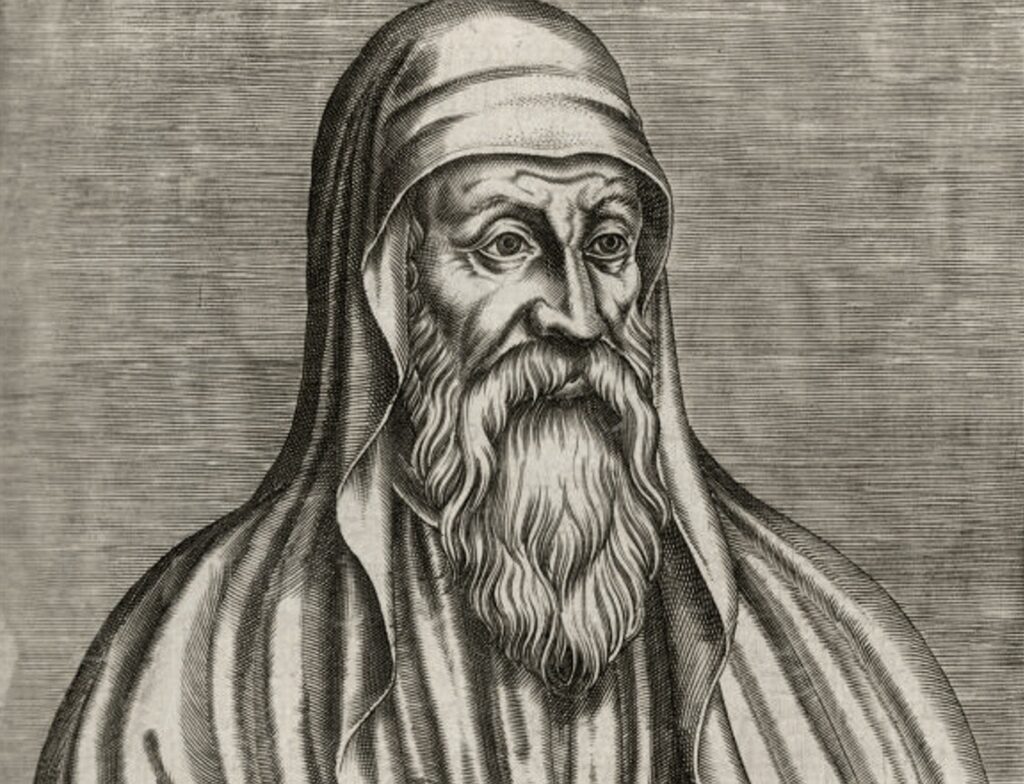
It was Origen who most extensively systematized the concept of universal salvation. His eschatological teachings, however, have come down to us in a somewhat altered form, due to corrections introduced by Rufinus in his Latin edition of On First Principles.
Nevertheless, the Church remains absolutely clear about the nature of Origen’s eschatology: his teachings on universal restoration were condemned as unorthodox by the Fifth Ecumenical Council.
According to Origen:
- All sinners would eventually be purified by the fire of hell.
- The degree of purification would correspond to the degree of one’s sinfulness.
- Eventually, all rational beings would be reunited with their Creator.
This vision—although intellectually impressive—was ultimately rejected by the Church as incompatible with the revealed doctrines of eternal judgment and the irrevocability of one’s spiritual state after death.
💬 Share your experience
Mini Poll: What Do You Think About Apokatastasis?
 Loading ...
🙏 Thank you for sharing your answer! Every story helps us see how faith lives in the hearts of people today.
🔥 What Exactly Is the Teaching of the Final End of Hell’s Torments?
The doctrine of the finality of hell’s torments is built upon several uniquely interpreted biblical expressions. In particular, it is based on the assertion that God will be “all in all” (1 Cor. 15:26–28), as well as on the assumption that—because of His boundless perfections such as mercy, supreme wisdom, and love—God would not allow sinners to suffer eternally. Instead, He would restore them through a purifying fire of hell, after which all people, without exception, would be united in love with God and with the assembly of saints.
Furthermore, it is implied that the duration of each sinner’s stay in hell after the Day of the Last Judgment will depend on the degree of their personal sinfulness. The greater the sinfulness, the longer and more intense will be the torment (see: “Are Hell’s Torments Eternal?”).
At one time, the idea of the universal restoration of sinners was expressed by St. Gregory of Nyssa. Later, this idea caused numerous objections from the Fathers of the Church. Before him, a similar thought was defended by Origen, who believed that after a certain period even the demons—and even Satan, the inventor of sin—would eventually be restored.
However, Origenism as a doctrine was condemned at the Fifth Ecumenical Council. Nevertheless, despite this conciliar decision, the teaching of the final end of hell’s torments has many supporters even today. Alongside theological arguments, followers of this doctrine appeal to the authority of St. Gregory of Nyssa, a widely venerated Father of the Church. However, as St. Basil the Great remarked, supporters of this idea may be driven by something else entirely—namely, that this teaching may be “the result of demonic deception” and is embraced by some so they may sin more boldly.
Christ Himself warned about the eternity of hell’s torments (Mark 9:43; Matt. 22:13; Matt. 25:46). Later, this teaching was clearly affirmed in the writings of many distinguished pastors of the Church. It is also explicitly stated in the Rite of Anathemas proclaimed on the Sunday of Orthodoxy:
“To those who deny the immortality of the soul, the end of the age, the future judgment, and the eternal reward for virtues in heaven—and eternal condemnation for sins—anathema.”
⚖️ Reflection by Sergey Khudiev
If we assume that life after death is real, then we must accept the reality of hell. This is unavoidable—and let us now consider why.
There are criminals who kidnap, torture, and murder women or children for pleasure. These are real cases. Eventually (one hopes) the police find them and isolate them from society until the end of their earthly lives.
Should God’s infinite mercy simply allow such people into Paradise—so they may behave there according to their dark desires? Then Paradise would cease to be Paradise.
Should God’s mercy cast them “outside the door”? If so, then you must already agree: to preserve Paradise as Paradise, someone must inevitably be excluded from it. This is not a lack of mercy—it is simply the fact that Paradise and unrepentant evil cannot coexist in the same place.

Of course, these criminals represent an extreme example. But the principle remains:
➡️ A heaven open to everyone without repentance would instantly turn into hell.
One can debate who exactly will be “cast out”—as Christ says, “cast into outer darkness”—but to say “no one will be cast out” is dishonest. Someone will be cast out—“into the outer darkness, where there will be weeping and gnashing of teeth.”
And if absolutely no one is cast out, then the weeping and gnashing of teeth will be inside.
It is necessary either to “destroy those who destroy the earth” (Rev. 11:18), or else they will continue destroying it forever.
Therefore, the Last Judgment—the final separation—is unavoidable, because:
“Nothing unclean, nor anyone who practices abomination or falsehood, shall ever enter it, but only those whose names are written in the Lamb’s Book of Life.” (Rev. 21:27)
If we ask the very relevant question:
How much evil or sin can be allowed into Paradise for it to remain Paradise?
The answer is clear from both Scripture and reason:
➡️ None.
And thus we return to the essential question: How can we enter Paradise?
This question only becomes meaningful when we acknowledge the reality—and the seriousness—of the danger from which we must be saved.
To say that “God’s mercy will not leave anyone outside” may sound comforting. But if we think for even five minutes, we will realize that such a claim would not mean the absence of hell—it would mean the absence of anything except hell.
God’s love and mercy preserve the Heavenly Jerusalem by not allowing evil to enter it.
When we understand this—affirmed repeatedly by Christ in the Gospel and logically evident—we become ready to speak about the salvation of sinners, which is the true expression of God’s mercy.
God’s infinite mercy extends so far that He became man in the Person of Jesus Christ, died for the sins of the lawless, offered forgiveness to all who repent, and transforms those who trust Him by the grace of the Holy Spirit.
But for this to happen, sinners must repent, turn to God, and accept forgiveness and a new life. And for that, they must be willing.
Therefore, Christians must not conceal the truth:
➡️ To enter Paradise, one must turn to God in repentance and faith.
Every loving and merciful person—including Christ Himself—therefore calls sinners to repentance.
If we refrain from upsetting evildoers and say, “It’s fine, God is too kind to cast anyone out,” we are lying to them. They will inevitably end up outside the door.
A sinner can enter Paradise only by accepting forgiveness and being deeply transformed. Without this transformation, Paradise ceases to be Paradise.
The Gospel is Good News, comforting and life-giving—but it reaches us only when we acknowledge our need for salvation.
When we surrender to God, we may comfort ourselves and one another with the firm promises of salvation given to every believer in Christ. But when we remain stubborn and unrepentant, the most loving thing others can do for us is warn us about the danger.
✅ Conclusion
In conclusion, while the doctrine of apokatastasis—the universal restoration of all beings—has appealed to some throughout history, Christian tradition consistently affirms that eternal separation from God is a real and sobering possibility. The teaching of Scripture, the testimony of the Fathers, and the words of Christ all emphasize both God’s limitless mercy and the necessity of repentance.
✨ God desires all to be saved, but He never forces salvation.
✨ Love requires freedom, and freedom allows the possibility of rejecting God.
✨ Therefore, salvation is offered to all—but accepted only by the repentant.
Keywords:
apokatastasis, universal salvation, Orthodox theology, eternal hell, Gregory of Nyssa, Origenism, repentance, Last Judgment, hellfire, eternal torment, Christian eschatology, Orthodox Church teaching
Tags:
Orthodoxy, Eschatology, Salvation, Theology, Early Church Fathers, Biblical Studies
Want to discuss further?
🙏 Every journey begins with awareness.
In my book “Mental Upgrade”, I share how faith, mindfulness, and inner strength help overcome fear and begin a new way of living
💭 Want to reflect on what you’ve just read?
Take a short quiz to deepen your understanding and explore your spiritual growth.
Start the quiz now →