A Christian Understanding of Death, Resurrection, and Eternal Life
Introduction: Why Christians Must Speak About Death
In our modern world, death is often treated as a taboo subject — something to fear, avoid, or ignore until it becomes unavoidable. Yet within the Christian tradition, death is not seen as the tragic end of existence. Rather, it is understood as a passage, a threshold, and ultimately, a door that opens into eternity.
Early Christians faced death with courage and even joy because they knew that earthly life is only the beginning of the human story. Their hope was not grounded in vague optimism but in the Resurrection of Christ Himself. He transformed death from a final prison into a gateway toward eternal life.
This article explores the Orthodox Christian understanding of death — what it is, how we should relate to it, how we can help the departed, and how the hope of the Resurrection transforms our entire view of life.
Want to discuss this further? Join the conversation on our forum: Search For Truth — Forum
Death as a Door: What Is Death?
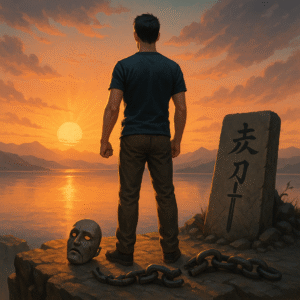
“Death is not a dead end; death is a door.”
According to Christian teaching, death is the temporary separation of the soul and the body, lasting until the Second Coming of the Savior, the Universal Resurrection, and the Final Judgment.
“Death is a temporary separation of the soul and the body, part of life until the Second Coming of the Savior, the Universal Resurrection, and the Last Judgment.”
However, Christianity emphasizes that death is not only a biological event — it is primarily a spiritual reality. A person can be physically alive yet spiritually dead, or physically dead yet spiritually alive in God.
“Death is first of all a spiritual phenomenon. One can be dead while still alive on earth and be untouched by death while lying in a grave. Spiritual death is the separation of a person from life, that is, from God.”
Christ is the only true Giver of Life:
“I am the Resurrection and the Life.” (John 11:25–26)
To be united with Him is life. To be separated from Him is death.
Will Everyone Be Raised from the Dead?
The answer in Orthodox teaching is simple and unequivocal:
Yes. All will be raised.
The Apostle Paul explains:
“…As death came through one man, so the resurrection of the dead also comes through a man. As in Adam all die, so in Christ all will be made alive.” — 1 Corinthians 15
Every human being who has ever lived will stand again in a resurrected body.
- The righteous will rise to eternal life.
- The unrepentant will rise to judgment.
But all will rise, because all share in the human nature that Christ came to restore.
How Can We Help the Departed?
One of the most profound teachings in the Orthodox Church is that the living can truly help those who have died.
“The departed need not tears nor feasting; they need prayer and mercy — acts of love offered in their memory!”
Tears and banquets do not help the soul.
But prayer, almsgiving, and deeds done in love truly benefit those who have passed away.

A powerful analogy illustrates this:
Imagine you are stopped at a customs checkpoint (what the ancient Church called “the toll-houses”). Your relatives can appeal to the authorities to help you. Instead, some of them weep helplessly, while others throw a feast hoping the situation will resolve itself.
This metaphor expresses the spiritual reality:
the prayers of the living matter.
They express love, which remains stronger than death.
Can the Departed Repent After Death?
This question is raised often, and the Church gives a firm and compassionate answer:
No. After death, a person can only rely on the prayers of others.
Scripture makes this clear:
“It is appointed for man to die once, and after that comes judgment.” — Hebrews 9:27
Saint Gregory of Nyssa teaches:
“In death no one can heal the illness caused by sin through remembrance of God, for confession has power only on earth; in Hades it does not exist.”
Repentance is an earthly opportunity — one of the greatest gifts of God.
After death, the soul remains in the state it chose, though it may be helped through the prayers and love of others.
How Do We Understand the Suffering and Death of Innocent People?
The suffering of children and innocent people is one of the most heart-wrenching questions humans face. But your text beautifully outlines several essential truths that make this question spiritually understandable.
1. Earthly life is not the whole story.
Compared to eternity, our earthly life is a brief moment. Death is not the end of a child’s existence — it is an entrance into eternal life.
2. Evil comes from human free will.
Evil answers the question “who?”, not “what?”
It is the result of human misuse of freedom.
If God removed all evil instantly, He would either:
- remove those who commit evil (including us),
- or
- remove our free will altogether.
3. Humanity is interconnected.
We are not isolated individuals.
Our choices affect others, sometimes in ways we do not understand.
4. God is not distant from suffering.
When a person cries out, “Where were You, Lord?”, the Christian answer is:
He was on the Cross before you.
He suffered before you ever lived.
Christ entered the depths of human pain — and transformed it.
5. Natural disasters and diseases are not “evil” by nature.
They are consequences of a world wounded by sin — not punishments from God.
💬 Share your experience
Do you believe all souls will eventually be restored to God?
 Loading ...
🙏 Thank you for sharing your answer! Every story helps us see how faith lives in the hearts of people today.
How Should a Christian Relate to Death?
Your final section summarizes the Christian attitude perfectly:
“With trembling over the smallness of our repentance and with hope in the mercy of God.”
Christians are not called to be fearless out of pride, but to trust in God’s mercy.
Saint Paul sets the ideal:
“For me, to live is Christ, and to die is gain.” — Philippians 1:21
And Saint John Chrysostom adds:
“A person is born mortal, and wisdom consists in fearing sins — not death.”
Death is not our enemy.
Sin is.
Death is a doorway through which we pass toward God.
The Iconography of Death in the Orthodox Tradition
Orthodox iconography teaches visually what Scripture teaches in words.
1. The Resurrection (Anastasis Icon)
Christ descends into Hades, breaks the gates of death, and raises Adam and Eve.
This shows that death has been conquered.
2. The Dormition of the Theotokos
The Mother of God lies in peace, while her soul is held like a child in Christ’s arms.
This reveals that the death of the righteous is a passage to life.
3. The Last Judgment Icon
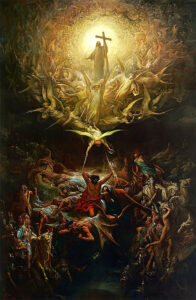
All humanity rises from the graves, standing before Christ’s throne.
This reminds us that earthly life has eternal significance.
Summary: What Christians Should Remember About Death
- Death is a temporary separation of soul and body.
- Spiritual death is separation from God — the true danger.
- All people will rise at the Universal Resurrection.
- The living can help the departed through prayer, mercy, and love.
- Repentance is possible only in this life.
- Suffering exists because of human freedom, not divine cruelty.
- Christ transforms death into a passage toward eternal life.
Conclusion: Death as a Door to Eternal Life
For Christians, death is not a meaningless tragedy or a fearful unknown. It is a threshold, a passage into the fullness of life. We approach it with:
- humility,
- repentance,
- peace,
- and above all —
hope in the mercy of God.
Christ has conquered death.
And because of Him, every door that once led to darkness now opens into everlasting light.
Keywords: Second Coming preparation,Christian readiness, waiting vs preparing for Christ, signs of the Second Coming, spiritual vigilance, Orthodox Christian teaching,end times faith, how to prepare for Christ’s return
Want to discuss further?
🙏 Every journey begins with awareness.
In my book “Mental Upgrade”, I share how faith, mindfulness, and inner strength help overcome fear and begin a new way of living
💭 Want to reflect on what you’ve just read?
Take a short quiz to deepen your understanding and explore your spiritual growth.
Start the quiz now →